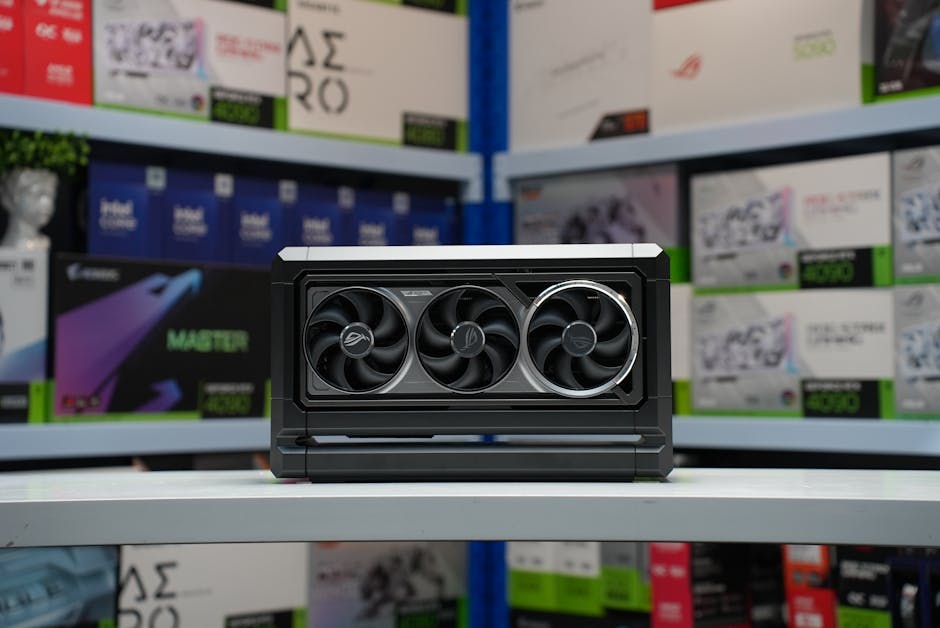
ASUS NUC AI Mini PC: The World's Most Powerful AI Development Machine Just Landed
ASUS revolutionizes AI development with the world's most powerful mini PC featuring NVIDIA's upcoming RTX 50 series mobile GPU, offering desktop-class performance in a portable form factor that changes how developers work with artificial intelligence.
ASUS NUC AI Mini PC: Revolutionizing AI Development
Hey there, tech enthusiasts! I've just witnessed something that made my developer heart skip a beat – ASUS has unleashed what might be the most exciting piece of hardware I've seen all year. Forget everything you thought you knew about mini PCs because this changes the game completely.
The Problem: AI Development's Hardware Bottleneck
Let's be real – developing AI applications has been a constant battle against hardware limitations. Either you're tethered to massive desktop rigs that sound like jet engines, or you're struggling with cloud costs that skyrocket faster than your model's accuracy. The compromise has always been there: power versus portability, performance versus practicality.
I've watched developers juggle multiple machines, struggle with thermal throttling, and constantly worry about whether their local hardware can handle the latest models. It's been the silent struggle of the AI revolution – the hardware just hasn't kept up with our ambitions.
The Solution: NVIDIA RTX 50 Series in a Mini Package
Enter the ASUS NUC AI Mini PC. This isn't just another mini computer – it's a statement. ASUS looked at the development landscape and said "enough with compromises." They've packed NVIDIA's upcoming RTX 50 series mobile GPU into a form factor that fits literally anywhere.
Key Features That Made Me Gasp:
Next-Gen GPU Power: We're talking about NVIDIA's RTX 50 series mobile GPU – architecture that hasn't even hit laptops yet. This means you're getting desktop-class AI acceleration in something smaller than most textbooks.
Thermal Engineering Magic: How did they manage the heat? Advanced vapor chamber cooling and what ASUS calls "3D airflow technology" – essentially, it stays cool under load without sounding like a helicopter taking off.
Developer-Focused Connectivity: Four Thunderbolt 4 ports, 2.5G Ethernet, Wi-Fi 7, and enough USB ports to make any peripherals happy. They've thought about everything from external storage to multiple monitor setups.
AI-Optimized Memory: Up to 64GB of DDR5 RAM with specific optimizations for AI workloads – because we all know how hungry these models can get.
Who Is This For? Let's Break It Down
AI Researchers & Data Scientists
If you're training models locally before pushing to production, this changes your workflow completely. The portability means you can take serious AI horsepower between lab, office, and home without skipping a beat.
Software Developers Building AI Features
Imagine having this on your desk instead of that massive tower. You can test AI integrations, run local inference, and develop features without constantly worrying about hardware limitations.
Edge AI Deployment Specialists
For those working on deployment scenarios where cloud connectivity isn't guaranteed, this provides enterprise-level AI capabilities in a form factor that fits almost anywhere.
Tech Enthusiasts & Early Adopters
Let's be honest – some of us just want the coolest new tech. This is arguably the most exciting piece of hardware I've seen since the first M1 MacBooks revolutionized mobile computing.
Why This Matters Beyond the Spec Sheet
What ASUS has done here goes beyond just putting powerful components in a small box. They're addressing a fundamental shift in how we work with AI. The line between development and deployment is blurring, and having this much power locally changes how we think about AI workflows.
I'm particularly excited about the implications for Agent Arena developers who need to test complex AI agent interactions locally before deployment. The ability to run multiple agents simultaneously with this level of performance could significantly accelerate development cycles.
The Bigger Picture: Hardware Keeping Pace with AI
This launch represents something crucial – hardware manufacturers are finally catching up to AI's demands. We've seen incredible software advancements, but the physical machines needed to run them have often been the bottleneck.
The ASUS NUC AI Mini PC isn't just a product; it's a signal that the industry understands where AI development is heading. For those interested in how hardware innovation is shaping AI capabilities, the recent developments in portable AI processing units show we're entering a new era of accessible artificial intelligence.
Final Thoughts: Is This the Future?
Looking at this machine, I can't help but feel we're witnessing a turning point. The era of being tethered to massive workstations for serious AI work might be ending. What ASUS has created isn't just powerful – it's practical, accessible, and frankly, exciting.
For developers, researchers, and tech enthusiasts alike, the ASUS NUC AI Mini PC represents more than just specs on a page. It represents freedom – the freedom to develop cutting-edge AI applications anywhere, anytime, without compromise.
What do you think? Is this the future of AI development hardware? I'd love to hear your thoughts on how portable powerful AI could change your workflow!
Subscribe to Our Newsletter
Get an email when new articles are published.
Article Digest
🔥 Popular Now
#1
The Democratization of Software: How AI is Turning Everyone into a Developer
#2
Apple's Smart Glasses Evolution: Testing Four Designs Signals Strategic Pivot
#3
When AI Tension Spills Onto the Streets: The Molotov Attack on Sam Altman's Home and What It Means for Tech's Future
#4
CUTEv2: The Universal Matrix Engine Revolutionizing CPU Architectures with Zero Overhead
#5
Microsoft's New Enterprise Agent: The Secure Answer to OpenClaw's Risks