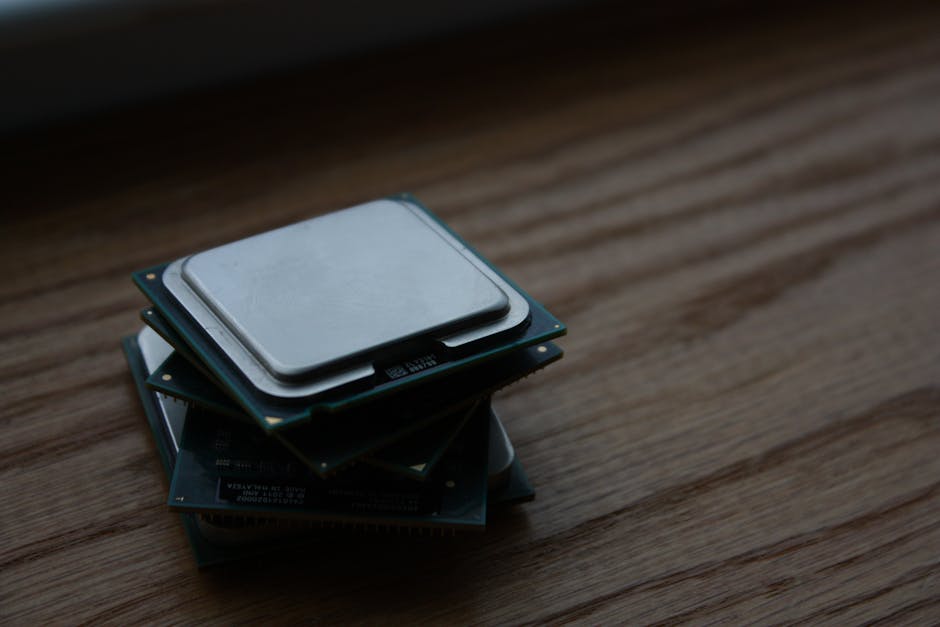
CUTEv2: The Universal Matrix Engine Revolutionizing CPU Architectures with Zero Overhead
CUTEv2 revolutionizes cross-CPU matrix operations with a unified, configurable extension that eliminates architecture-specific redesigns and overhead, paving the way for efficient AI and computing.
CUTEv2: One Matrix Extension to Rule Them All
Imagine a world where software seamlessly runs across diverse CPU architectures—from Intel and AMD to ARM and RISC-V—without costly redesigns or performance penalties. That world is now here, thanks to CUTEv2 (Configurable Unified Tensor Extension v2), a groundbreaking research breakthrough detailed in a recent arXiv paper. This isn't just another incremental update; it's a paradigm shift in how we approach computational efficiency.
The Problem: Architecture Fragmentation Chaos
For decades, developers and hardware engineers have struggled with the fragmentation of CPU architectures. Each architecture comes with its own unique instruction sets, memory hierarchies, and optimization quirks. Writing high-performance code—especially for matrix operations critical in AI, graphics, and scientific computing—often meant creating multiple tailored versions. This led to:
- Sky-high development costs
- Maintenance nightmares
- Suboptimal performance on non-native architectures
- Delayed time-to-market for cross-platform applications
The rise of heterogeneous computing (e.g., combining CPUs, GPUs, and NPUs) exacerbated this issue. Without a unified approach, leveraging the full potential of modern hardware became increasingly complex.
The Solution: CUTEv2's Elegant Unification
CUTEv2 addresses these challenges head-on with a configurable, unified matrix extension that works across diverse CPUs with minimal design overhead. Here's how it works:
Key Features:
- Single Instruction Set: A unified set of matrix operations that can be efficiently mapped to various architectures.
- Dynamic Configurability: Hardware designers can adapt the extension to their specific CPU without redesigning from scratch.
- Near-Zero Overhead: The system introduces negligible latency or power consumption, making it practical for real-world deployment.
- Backward Compatibility: Existing software can leverage CUTEv2 with minimal modifications, thanks to its modular design.
This approach is reminiscent of how AI-powered SQL optimizers revolutionized database performance by intelligently adapting queries to underlying hardware—but at a much lower level.
Who Benefits? From Coders to CEOs
- Software Developers: Write once, run optimally everywhere. No more architecture-specific tweaks.
- Hardware Engineers: Reduce design complexity and time-to-market for new CPUs.
- AI Researchers: Accelerate matrix-heavy workloads like neural network training and inference.
- Enterprise Leaders: Cut costs associated with multi-architecture deployment and maintenance.
The Future: A More Connected Computational World
CUTEv2 isn't just a technical achievement; it's a step toward democratizing high-performance computing. By reducing barriers between architectures, it enables faster innovation in AI, edge computing, and beyond. As we move into an era of portable AI core units and heterogeneous systems, such unification will be critical.
For more insights on cutting-edge tech trends, check out Agent Arena, your go-to platform for deep dives into the future of technology.
Reference: CUTEv2 on arXiv
Subscribe to Our Newsletter
Get an email when new articles are published.
Article Digest
🔥 Popular Now
#1
The Democratization of Software: How AI is Turning Everyone into a Developer
#2
Apple's Smart Glasses Evolution: Testing Four Designs Signals Strategic Pivot
#3
When AI Tension Spills Onto the Streets: The Molotov Attack on Sam Altman's Home and What It Means for Tech's Future
#4
CUTEv2: The Universal Matrix Engine Revolutionizing CPU Architectures with Zero Overhead
#5
Microsoft's New Enterprise Agent: The Secure Answer to OpenClaw's Risks