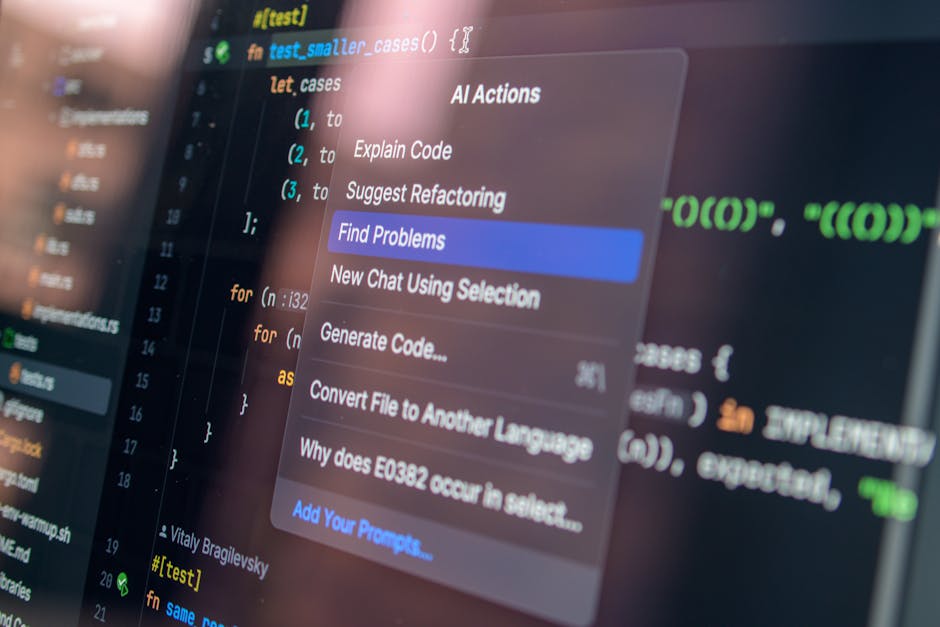
The Democratization of Software: How AI is Turning Everyone into a Developer
AI is breaking down coding barriers, enabling professionals from doctors to teachers to build custom software solutions without technical expertise—transforming how innovation happens across every industry.
The Code Barrier Has Fallen
Remember when building software required years of computer science education? When developers spoke in languages the rest of us couldn't understand? That era is ending faster than anyone predicted. We're witnessing the most significant shift in technology creation since the invention of the compiler.
The Problem: Digital Exclusion
For decades, software development remained an exclusive club. Brilliant doctors with revolutionary medical ideas couldn't build their own diagnostic tools. Innovative teachers with groundbreaking educational methods couldn't create their own learning platforms. The technical barrier was simply too high—requiring knowledge of programming languages, frameworks, infrastructure, and deployment processes that took years to master.
This created a dependency bottleneck where every industry had to wait for software developers to translate their domain expertise into digital solutions. The result? Slow innovation, misinterpreted requirements, and incredible ideas that never saw the light of day because they couldn't cross the technical chasm.
The Solution: AI-Powered Creation
Enter artificial intelligence—the great equalizer. Modern AI tools have evolved from simple code assistants to full-fledged creation engines. Through natural language interfaces, professionals can now describe what they want in plain English (or any language), and AI systems generate fully functional applications.
Key Features Driving Democratization:
Natural Language Programming: Describe your application's functionality in everyday language, and watch as AI translates your vision into working code.
Domain-Specific Templates: Pre-built components tailored for specific industries—medical diagnosis interfaces, legal document analyzers, educational content generators.
One-Click Deployment: Cloud platforms automatically handle infrastructure, security, and scaling, removing the technical overhead that previously required dedicated DevOps teams.
Self-Debugging Systems: AI doesn't just write code—it identifies and fixes errors in real-time, learning from mistakes and continuously improving output quality.
Who Benefits From This Revolution?
Medical Professionals
Doctors are building custom diagnostic tools that understand their specific medical specialty. Radiologists create AI assistants that recognize rare conditions they encounter daily. Surgeons develop simulation software for complex procedures specific to their techniques.
Legal Experts
Law firms develop contract analysis systems that understand their specific practice areas. Solo practitioners create document automation tools that handle their unique case workflows. Legal researchers build AI systems that track precedent changes relevant to their specialization.
Educators
Teachers design adaptive learning platforms that match their teaching philosophy. Professors create interactive simulations for complex concepts they struggle to explain traditionally. Educational researchers build assessment tools that measure learning outcomes in ways standardized tests cannot.
Small Business Owners
Entrepreneurs develop custom inventory management systems without hiring developers. Restaurant owners create reservation and kitchen management tools tailored to their unique operations. Retailers build customer loyalty programs that integrate seamlessly with their existing processes.
This transformation extends beyond traditional professions. Artists generate interactive art installations. Farmers create precision agriculture tools. Mechanics develop diagnostic systems for specific vehicle models. The common thread? Domain expertise becoming digital capability without technical intermediaries.
The Ripple Effects
This democratization creates fascinating secondary effects. Traditional software developers aren't becoming obsolete—they're shifting to higher-value work. Instead of writing basic CRUD applications, they're building the AI systems that empower domain experts, creating more sophisticated tools, and solving harder architectural problems.
The economics of software are changing too. When development costs drop from thousands of dollars to hours of description, innovation accelerates exponentially. Niche solutions that were previously economically unviable suddenly make sense. Custom software for audiences of dozens rather than millions becomes practical.
Looking Ahead
We're still in the early innings of this revolution. As AI systems become more sophisticated, we'll see even more powerful creation capabilities. Imagine describing complex multi-system architectures and having AI not only generate the code but also provision the infrastructure, set up monitoring, and handle scaling policies.
The future isn't about everyone becoming a programmer—it's about everyone becoming a creator. The distinction between "technical" and "non-technical" people will blur until it becomes meaningless. What matters won't be whether you can code, but whether you can clearly articulate solutions to problems in your domain.
This shift represents perhaps the most significant increase in human capability since the industrial revolution. We're not just automating manual labor—we're automating the translation of expertise into actionable tools.
For those interested in how AI is transforming specific technical domains, the AI Powered SQL Optimizer represents another fascinating example of how artificial intelligence is making complex technical tasks accessible to broader audiences.
Want to stay ahead of these transformative trends? Follow the latest developments at Agent Arena, where we track how AI is reshaping every aspect of technology creation and deployment.
Subscribe to Our Newsletter
Get an email when new articles are published.
Article Digest
🔥 Popular Now
#1
The Democratization of Software: How AI is Turning Everyone into a Developer
#2
Apple's Smart Glasses Evolution: Testing Four Designs Signals Strategic Pivot
#3
When AI Tension Spills Onto the Streets: The Molotov Attack on Sam Altman's Home and What It Means for Tech's Future
#4
CUTEv2: The Universal Matrix Engine Revolutionizing CPU Architectures with Zero Overhead
#5
Microsoft's New Enterprise Agent: The Secure Answer to OpenClaw's Risks