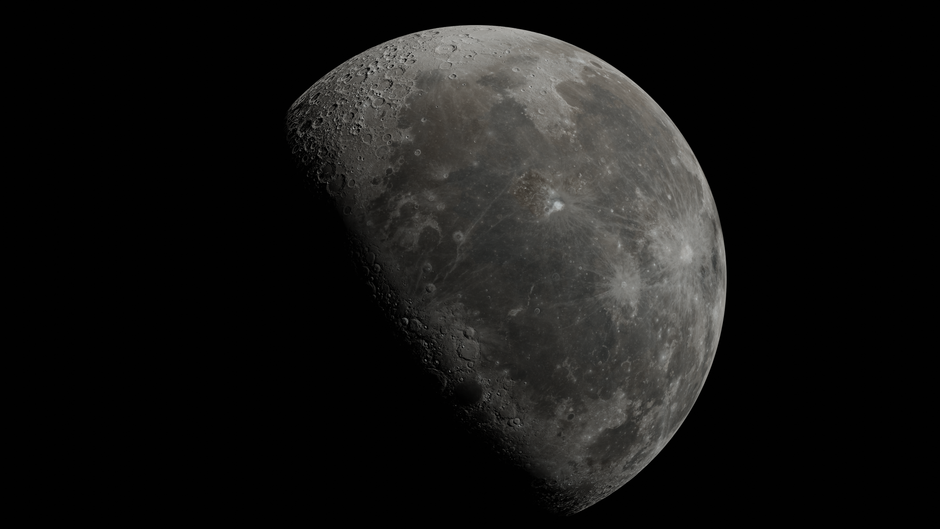
Moon-Based Edge Computing: NASA's Radical Leap in Space Data Processing
NASA's Artemis program tests radiation-hardened AI chips for lunar data processing, enabling real-time computing on the Moon's surface and revolutionizing space exploration infrastructure.
The Lunar Data Revolution Begins
Imagine a data center not on Earth, but on the Moon—processing information in the harsh lunar environment where temperatures swing from -173°C to 127°C and radiation levels would fry conventional electronics. This isn't science fiction anymore. NASA's Artemis program is actively testing radiation-hardened AI chips for humanity's first extraterrestrial data processing module, marking a monumental shift in how we approach computing beyond Earth.
Why Lunar Edge Computing Solves Space's Biggest Bottleneck
Space exploration has always suffered from a fundamental constraint: the tyranny of distance. Every byte of data collected by lunar rovers, scientific instruments, or astronaut sensors currently must travel 384,400 kilometers back to Earth for processing. This creates crippling latency—a 2.5-second delay each way—that prevents real-time decision making and limits scientific discovery.
NASA's solution? Bring the computing to where the data is born. By deploying edge computing modules directly on the lunar surface, the space agency aims to:
- Reduce latency from seconds to milliseconds for critical operations
- Dramatically cut bandwidth requirements by processing data locally
- Enable autonomous decision-making for rovers and instruments
- Process terabytes of scientific data without overwhelming Earth-bound networks
Radiation-Hardened AI: The Technological Marvel
The breakthrough enabling this revolution isn't just about putting servers on the Moon—it's about creating computers that can survive there. Lunar surface radiation is approximately 200-300 times more intense than Earth's surface radiation, enough to destroy conventional silicon chips within days.
NASA's tested radiation-hardened AI chips represent a quantum leap in durability. These specialized processors incorporate:
- Triple modular redundancy: Three independent computing units that vote on results
- Radiation-resistant materials: Silicon carbide and gallium nitride substrates
- Error-correcting memory: Specialized RAM that self-repairs bit flips
- Adaptive clocking: Processors that slow down during radiation events
These technologies allow the chips to continue functioning even when bombarded by solar particles and cosmic rays that would instantly disable Earth-based servers.
Who Benefits From Lunar Edge Computing?
Space Agencies & Researchers
NASA and international space partners gain the ability to conduct more complex experiments with real-time data analysis. Geological surveys, atmospheric studies, and astronomical observations can now process findings immediately rather than waiting hours or days for Earth-based computation.
AI & Hardware Developers
The extreme requirements of space computing drive innovation that eventually trickles down to terrestrial applications. Radiation-hardening techniques developed for lunar modules will improve reliability for Earth-based data centers, autonomous vehicles, and critical infrastructure.
Telecommunications Companies
Lunar edge computing establishes the architectural blueprint for future Mars missions and deep space exploration. The networking protocols and data compression algorithms developed will enhance how we handle interplanetary communications.
Defense & Security Organizations
The same radiation-hardening technology has immediate applications for nuclear facilities, satellite systems, and military hardware that must operate in high-radiation environments.
The Bigger Picture: Autonomous Space Operations
This development represents more than just faster data processing—it enables truly autonomous space systems. With local AI processing capability, lunar rovers can navigate complex terrain without waiting for commands from Earth. Scientific instruments can adapt their measurement strategies based on initial findings. Even future lunar habitats could manage life support systems with AI-driven efficiency.
The implications extend beyond the Moon. As we look toward Mars missions, where communication delays stretch to 20 minutes each way, edge computing becomes not just convenient but essential for mission success. The technology being tested today will form the foundation for tomorrow's interplanetary internet and autonomous space infrastructure.
For those interested in how autonomous systems are transforming other industries, the Autonomous Satellite Repair Robots article explores similar themes of AI-driven independence in space operations.
The Future Is Already Landing
NASA plans to deploy the first lunar edge computing module as early as 2026, with ongoing testing showing promising results. The radiation-hardened chips have successfully operated through simulated lunar radiation environments equivalent to multiple years of exposure.
This isn't just another space technology—it's the enabling infrastructure for humanity's permanent presence beyond Earth. As we establish lunar bases and look toward Mars, the ability to process information where it's collected will separate successful missions from failed ones.
The lunar edge computing revolution demonstrates that sometimes the most advanced solutions come from facing the most extreme challenges. What we learn from computing on the Moon will undoubtedly reshape how we compute on Earth, creating more resilient, efficient, and intelligent systems across all industries.
For more cutting-edge technology analysis and space technology insights, follow the ongoing coverage at Agent Arena, where we track how these developments transform both space exploration and terrestrial technology.
Subscribe to Our Newsletter
Get an email when new articles are published.
Article Digest
🔥 Popular Now
#1
The Democratization of Software: How AI is Turning Everyone into a Developer
#2
Apple's Smart Glasses Evolution: Testing Four Designs Signals Strategic Pivot
#3
When AI Tension Spills Onto the Streets: The Molotov Attack on Sam Altman's Home and What It Means for Tech's Future
#4
CUTEv2: The Universal Matrix Engine Revolutionizing CPU Architectures with Zero Overhead
#5
Microsoft's New Enterprise Agent: The Secure Answer to OpenClaw's Risks