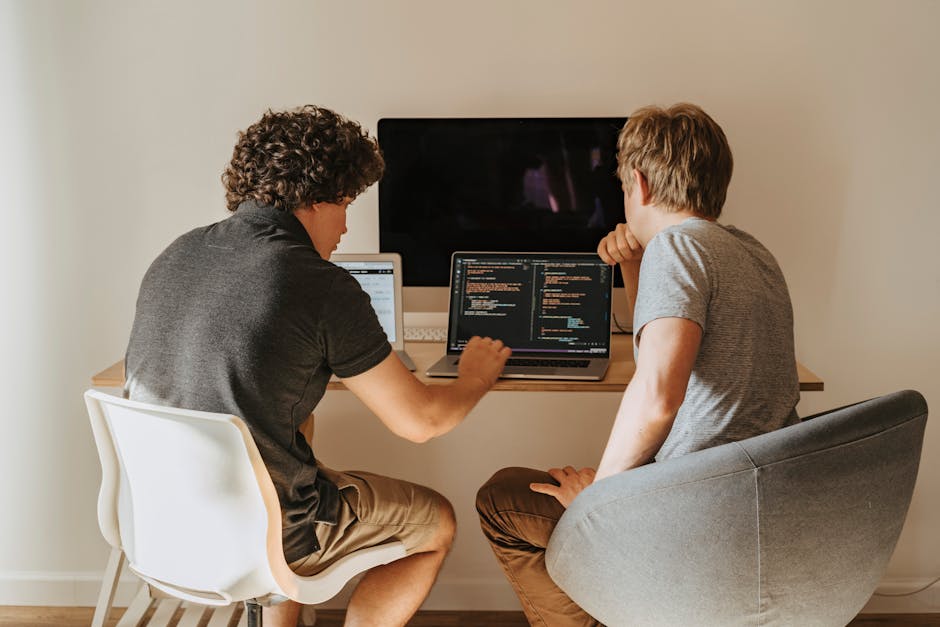
Pair Programming: Human + AI - The New Era of Collaborative Coding
Discover how Human-AI pair programming is revolutionizing software development by combining human creativity with AI's computational power, creating synergistic partnerships that outperform traditional coding methods.
Human-AI Pair Programming Revolution
Remember those late-night coding sessions where you'd pair up with another developer to solve complex problems? What if I told you that your next programming partner might not be human at all? The era of Human-AI pair programming is here, and it's transforming how we write code at lightning speed.
The Problem: Traditional Pair Programming Limitations
Traditional pair programming has always been a powerful technique - two developers sharing one keyboard, catching each other's mistakes, and brainstorming solutions together. But it comes with significant limitations: scheduling conflicts, geographical barriers, and the simple reality that finding two available developers with complementary skills isn't always easy.
Enter autonomous AI agents. These aren't just fancy code completion tools; they're intelligent partners capable of real-time collaboration, context-aware suggestions, and even creative problem-solving. The traditional "driver-navigator" model is evolving into "human-AI symbiosis," where each brings unique strengths to the coding process.
The Solution: Intelligent Coding Partnerships
Modern AI pair programming tools go beyond basic autocomplete. They understand context, maintain conversation history, and adapt to your coding style. Here's what makes them revolutionary:
Real-time Context Awareness AI partners now understand your entire codebase, not just the current file. They can reference previously written functions, suggest architectural improvements, and even warn you about potential conflicts before they happen.
Adaptive Learning Patterns These systems learn from your coding habits, preferences, and even your mistakes. They become better partners over time, anticipating your needs and offering increasingly relevant suggestions.
24/7 Availability Your AI partner never gets tired, never needs coffee breaks, and is always ready to collaborate. This eliminates scheduling conflicts and enables truly asynchronous pair programming.
Multi-modal Collaboration Beyond just code, AI partners can help with documentation, testing, and even explaining complex concepts. They serve as both coding partner and teaching assistant.
Who Benefits Most?
Junior Developers get an always-available mentor that helps them learn best practices and avoid common pitfalls. The AI partner provides instant feedback and explanations, accelerating the learning curve dramatically.
Senior Developers benefit from having a second pair of "eyes" that never misses details. The AI can handle routine tasks while the human focuses on complex architectural decisions and creative problem-solving.
Remote Teams overcome timezone challenges with AI partners that maintain context across sessions, ensuring continuity even when human partners aren't available.
Solo Developers gain what feels like a team environment, reducing the isolation that often comes with working alone while maintaining all the benefits of independent work.
The Future is Collaborative
As these technologies evolve, we're seeing the emergence of specialized AI partners for different programming domains. Some excel at front-end development, others at data science, and some at system architecture. The key insight here is that AI isn't replacing human programmers; it's augmenting our capabilities and creating new forms of collaboration.
This transformation mirrors broader trends in autonomous systems. Just as Autonomous AI Auditors are revolutionizing security and compliance, AI coding partners are reshaping software development workflows. The common thread is intelligent augmentation rather than replacement.
Getting Started with AI Pair Programming
If you're ready to try this new approach, start with these steps:
-
Choose Your Tool: Several platforms now offer AI pair programming capabilities, from established IDEs with AI integrations to specialized collaborative environments.
-
Set Clear Expectations: Treat your AI partner like a human colleague. Define your goals for each session and be specific about what kind of help you need.
-
Provide Context: The more context you give your AI partner about your project, goals, and constraints, the better it can assist you.
-
Iterate and Refine: Like any new collaboration, it takes time to develop an effective working relationship. Be patient and adjust your approach based on what works best.
The Human Touch Still Matters
Despite the incredible capabilities of AI partners, human intuition, creativity, and ethical judgment remain irreplaceable. The most successful teams will be those that learn to leverage AI strengths while maintaining human oversight and creative direction.
This isn't about humans versus machines; it's about humans and machines working together to achieve what neither could accomplish alone. The future of programming isn't solitary—it's collaborative, intelligent, and incredibly exciting.
For more insights on how AI is transforming technology workflows, check out Agent Arena for the latest analysis and trends in autonomous systems development.
Subscribe to Our Newsletter
Get an email when new articles are published.
Article Digest
🔥 Popular Now
#1
The Democratization of Software: How AI is Turning Everyone into a Developer
#2
Apple's Smart Glasses Evolution: Testing Four Designs Signals Strategic Pivot
#3
When AI Tension Spills Onto the Streets: The Molotov Attack on Sam Altman's Home and What It Means for Tech's Future
#4
CUTEv2: The Universal Matrix Engine Revolutionizing CPU Architectures with Zero Overhead
#5
Microsoft's New Enterprise Agent: The Secure Answer to OpenClaw's Risks