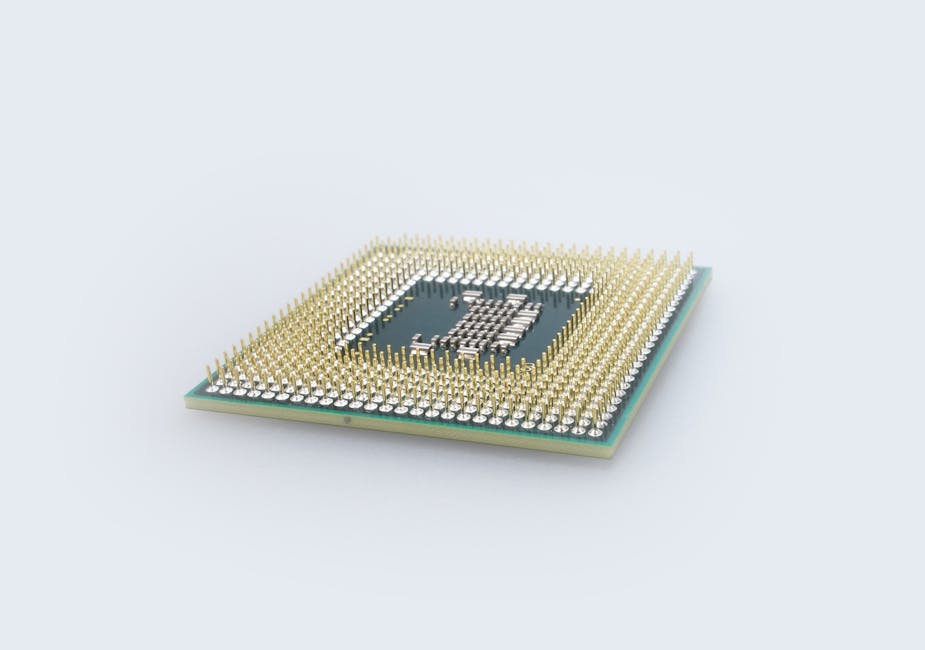
Photonic AI Processors: The 100x Faster, Cooler Computing Revolution
Discover how photonic AI processors using light instead of electrons achieve 100x speed improvements while running cool, revolutionizing AI computation and sustainable computing.
Photonic AI Processors: Computing at the Speed of Light
The Problem: Why Our Current Hardware Is Hitting a Wall
For decades, Moore's Law has driven computing progress, but we're rapidly approaching physical limits. Traditional silicon-based processors generate immense heat, consume excessive power, and face bandwidth bottlenecks that restrict AI's growth potential. As AI models grow exponentially larger - with GPT models requiring millions of GPU hours to train - we've hit a thermal and computational wall that threatens to stall innovation.
The Brilliant Solution: Light-Based Computing
Photonic AI processors represent a paradigm shift by using photons (light particles) instead of electrons to process information. These chips contain microscopic lasers, modulators, and detectors that manipulate light waves to perform mathematical operations at speeds previously unimaginable.
Key Breakthrough Features:
Light-Speed Computation: Photons travel at, well, light speed - approximately 100 times faster than electron movement through silicon, enabling unprecedented processing speeds.
Near-Zero Heat Generation: Unlike traditional chips that waste 60-70% of energy as heat, photonic chips operate at room temperature with minimal thermal output.
Massive Parallel Processing: Light waves can simultaneously process multiple calculations through different wavelengths, dramatically increasing parallel processing capabilities.
Energy Efficiency: Early implementations show 10-100x improvement in computations per watt compared to best-in-class GPUs.
Who Benefits From This Revolution?
AI Researchers & Developers: Train complex models in hours instead of weeks, enabling rapid experimentation and innovation.
Data Center Operators: Reduce cooling costs by up to 90% while increasing computational density per rack.
Edge Computing Applications: Deploy powerful AI capabilities in remote locations without massive cooling infrastructure.
Climate-Conscious Organizations: Significantly reduce the carbon footprint of large-scale computing operations.
Quantum Computing Researchers: Photonic processors may serve as crucial interfaces between classical and quantum systems.
The Road Ahead
While still in early commercialization phases, companies like Lightmatter, Lightelligence, and Luminous Computing are already demonstrating working prototypes. The technology promises to unlock new AI capabilities that were previously computationally impossible, from real-time complex simulations to instant language translation across hundreds of languages.
As we stand at this technological crossroads, photonic processors aren't just an incremental improvement - they're the foundation for the next era of computing, where speed and sustainability finally converge.
Subscribe to Our Newsletter
Get an email when new articles are published.
Article Digest
🔥 Popular Now
#1
The Democratization of Software: How AI is Turning Everyone into a Developer
#2
Apple's Smart Glasses Evolution: Testing Four Designs Signals Strategic Pivot
#3
When AI Tension Spills Onto the Streets: The Molotov Attack on Sam Altman's Home and What It Means for Tech's Future
#4
CUTEv2: The Universal Matrix Engine Revolutionizing CPU Architectures with Zero Overhead
#5
Microsoft's New Enterprise Agent: The Secure Answer to OpenClaw's Risks