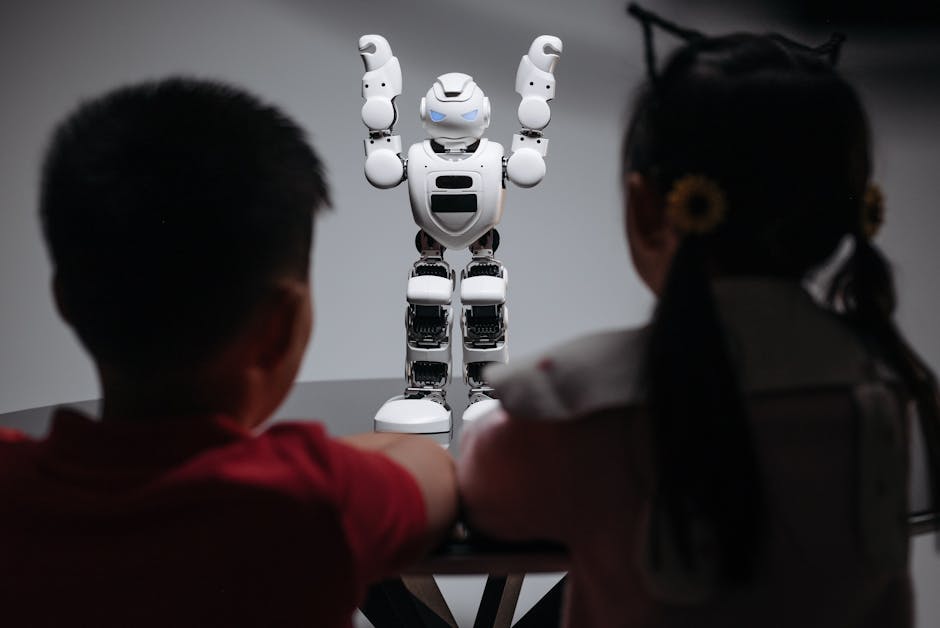
The Dawn of Autonomous Learning: How Robots Are Now Mastering Physical Tasks Just By Watching Videos
Discover how a new AI model enables robots to learn physical tasks autonomously by watching videos, reducing programming needs and increasing adaptability.
The Silent Revolution in Robotics
Imagine a world where robots don't need complex programming to perform tasks—they simply watch and learn, much like humans do. This isn't science fiction anymore. A groundbreaking new model is enabling robots to autonomously learn physical tasks, like operating a coffee machine, just by observing video demonstrations. Let's dive into how this transformative technology works and why it matters.
The Problem: The Limitations of Traditional Robotics
Traditional robotics has always faced a significant hurdle: the need for extensive, explicit programming. For a robot to perform even a simple task, engineers must code every movement, account for countless variables, and run endless simulations. This process is time-consuming, expensive, and rigid. What if the environment changes? What if the task is slightly different? Traditional robots struggle with adaptability, making them inefficient for dynamic, real-world applications.
The Solution: Video-Based Autonomous Learning
The new model leverages advanced AI and computer vision to interpret video inputs and translate them into actionable tasks. Here's how it works in simple terms:
-
Observation: The robot watches a video of a human performing a task, such as making coffee.
-
Interpretation: Using deep learning algorithms, it breaks down the video into key frames and actions—pressing buttons, pouring water, handling cups.
-
Simulation: The robot mentally rehearses the task, creating a internal model of the movements required.
-
Execution: Finally, it attempts the task in the physical world, refining its actions through trial and error.
This approach mimics human learning, allowing robots to generalize from one demonstration to similar tasks, even in varied environments.
Key Features That Make It Revolutionary
- No Manual Programming Required: Reduces development time and costs dramatically.
- High Adaptability: Robots can adjust to new tools or environments without reprogramming.
- Scalability: One video can teach multiple robots, enabling rapid deployment.
- Real-Time Learning: Continuous improvement through practice, much like muscle memory in humans.
Who Is This For?
- Software Developers: Explore integrating these models into existing robotics platforms.
- Entrepreneurs: Leverage this tech for startups in service industries, like hospitality or healthcare.
- Designers: Create more intuitive human-robot interaction interfaces.
- Researchers: Push the boundaries of AI and machine learning applications.
The Future Is Learning Autonomously
This innovation isn't just about convenience; it's a paradigm shift. As robots become more capable of learning independently, they will integrate seamlessly into daily life, from homes to factories. The era of robots that learn like humans is here—and it's only getting started.
Embrace the change. The future of robotics is autonomous, adaptive, and incredibly exciting.
Subscribe to Our Newsletter
Get an email when new articles are published.
Article Digest
🔥 Popular Now
#1
The Democratization of Software: How AI is Turning Everyone into a Developer
#2
Apple's Smart Glasses Evolution: Testing Four Designs Signals Strategic Pivot
#3
When AI Tension Spills Onto the Streets: The Molotov Attack on Sam Altman's Home and What It Means for Tech's Future
#4
CUTEv2: The Universal Matrix Engine Revolutionizing CPU Architectures with Zero Overhead
#5
Microsoft's New Enterprise Agent: The Secure Answer to OpenClaw's Risks